
foundations
What Frankenstein Got Right About Power
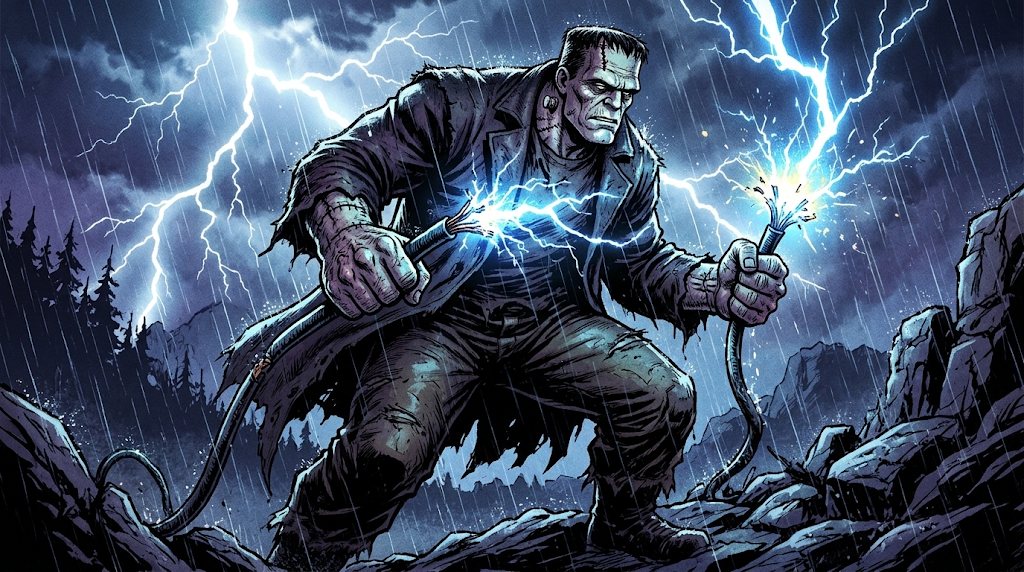
Mary Shelley’s monster was built from parts that were each fine on their own. The trouble came from how they were put together and what nobody was watching. With FMP… “There’s somebody watching me!”

The Monster Problem
Power systems have a long history of being powerful first and safe second. Traditional AC circuits deliver a lot of energy and rely on circuit breakers and conduit to manage what goes wrong, but a typical breaker allows 200 times more energy than is needed to stop our heart! And when it trips, the only indication you get is the power goes out. You may not get nervous when you plug in your appliances, but how many people would be comfortable opening up their electrical panel?
The Fault-Managed Approach
Class 4 power flips the order. The system monitors the circuit constantly, and it is designed to stop transmitting power within milliseconds when a fault occurs. Instead of hoping the protection works, the design depends on continuous monitoring.
Key Takeaways for Power System Safety
- Monitor holistically: Focus on total system behavior rather than evaluating individual components in isolation.
- Engineer for failure: Design proactive protocols that safely contain faults the moment standard operations break down.
- Prioritize instant response: Implement real-time monitoring capable of cutting power milliseconds before damage or harm occurs.