
foundations
Types of Electrical Faults, Explained
By ChatFMP Subject Matter Expert · Reviewed by Luke Getto · Last reviewed November 16, 2026
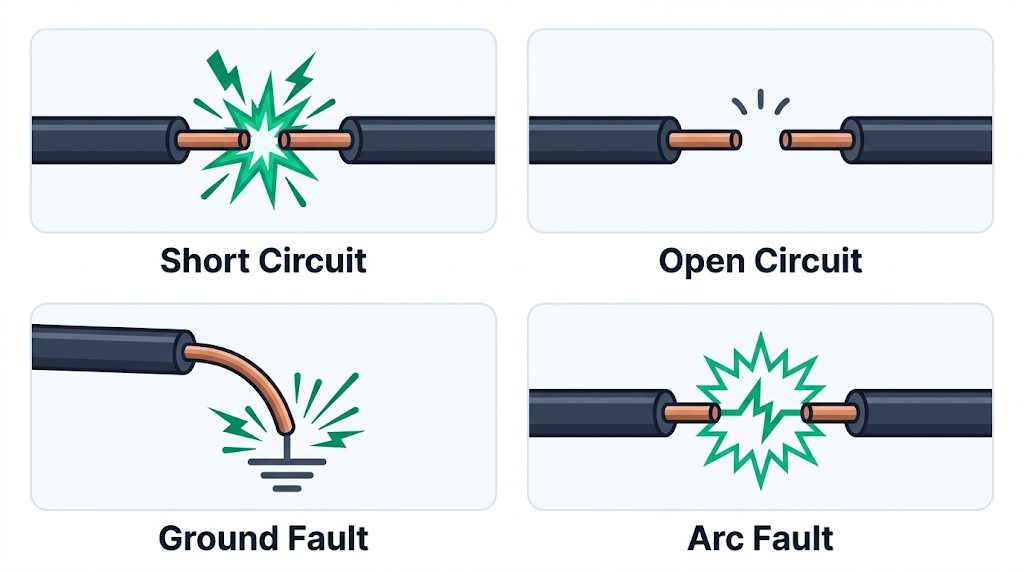
An electrical fault is any unintended path for current. Some faults are quiet, and some are dangerous. The right protection depends on which one you are dealing with.
Common Fault Types
- Short circuit: a low-resistance path between conductors.
- Ground fault: current leaking to ground, often through a person or equipment.
- Arc fault: an unintended electrical discharge across a gap.
- Series fault: a high-resistance connection that heats up without tripping a breaker.
Why Fault Type Matters
A circuit-breaker is built for overcurrent. It does not always respond quickly to a high-resistance fault or a person in contact with a live conductor. That gap is one reason Class 4 fault-managed power monitors the circuit continuously.
How Class 4 Responds
The transmitter watches for faults and stops sending power immediately when it detects one. The design goal is to keep the energy delivered into any fault well below hazardous levels.
Electrical faultsClass 4 FMPSExplainer