
intermediate
Electrical Knowledge for Non-Engineers
Watch the 60-second video breakdown: Basics of Electricity on YouTube
Before diving into FMPS, it helps to strip electricity down to its core mechanics. Whether you manage building infrastructure or are just brushing up on electrical fundamentals, understanding how power moves comes down to: voltage, current, and resistance.
What Is Electricity?
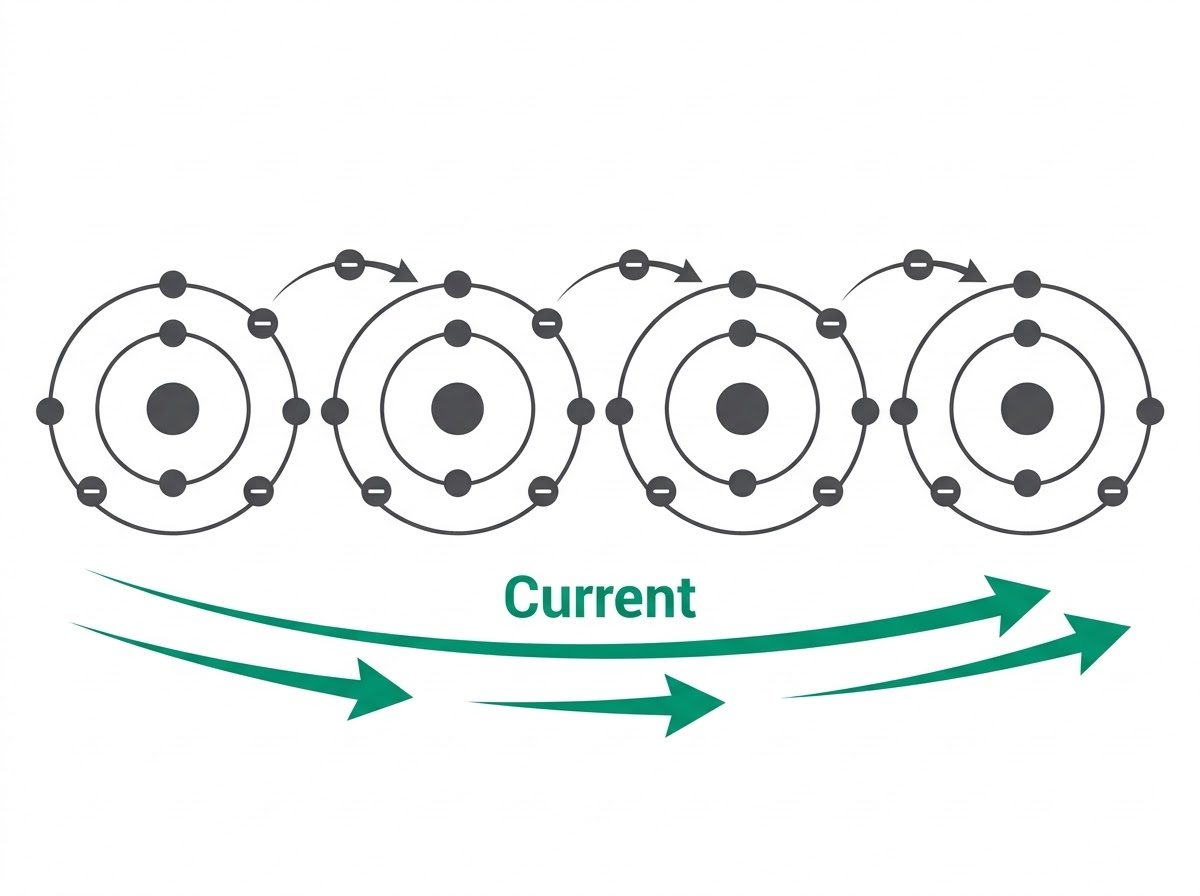
Electricity is a fundamental part of nature and one of the most widely used forms of energy on the planet. Everything around us is made of atoms, and inside those atoms are negatively charged particles called electrons.
When an external force frees an electron from an atom and pushes it to move to a neighboring atom, a chain reaction occurs. That continuous movement of electrons through a conductor (like a copper wire) is what we call an electric current.
The Water-Pipe Analogy: Closed-Loop Systems
Because you can’t see electrons moving through a copper conductor, engineers rely on a classic comparison: water flowing through a closed plumbing system.
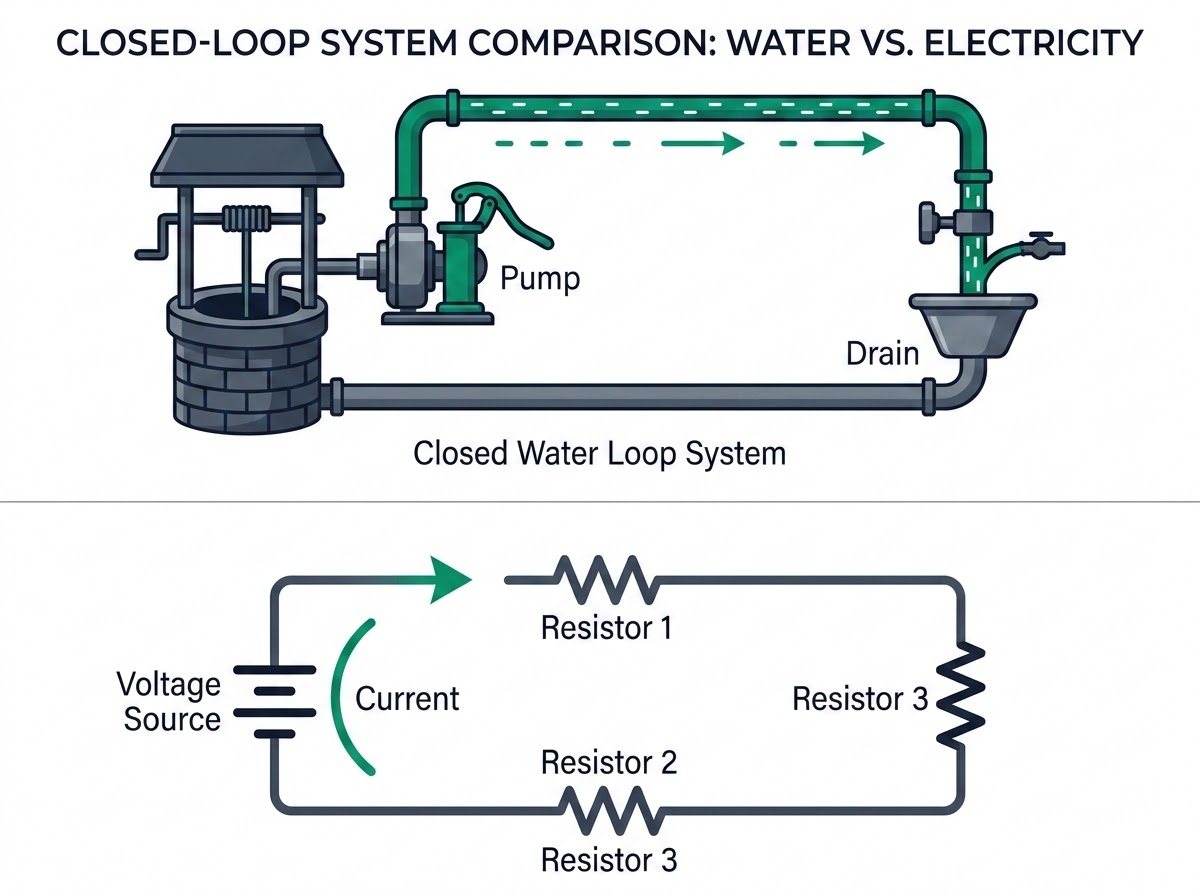
In both systems, energy needs a complete, unbroken path—a closed loop—to do useful work. A pump pushes water out of a well through pipes and back into the drain; a power source pushes electrons through a circuit and back to the return path.
Voltage: The “Pressure” That Pushes Electrons
Voltage (V) is the electrical equivalent of water pressure in a pipe. It is the force that pushes electrons through a conductor.
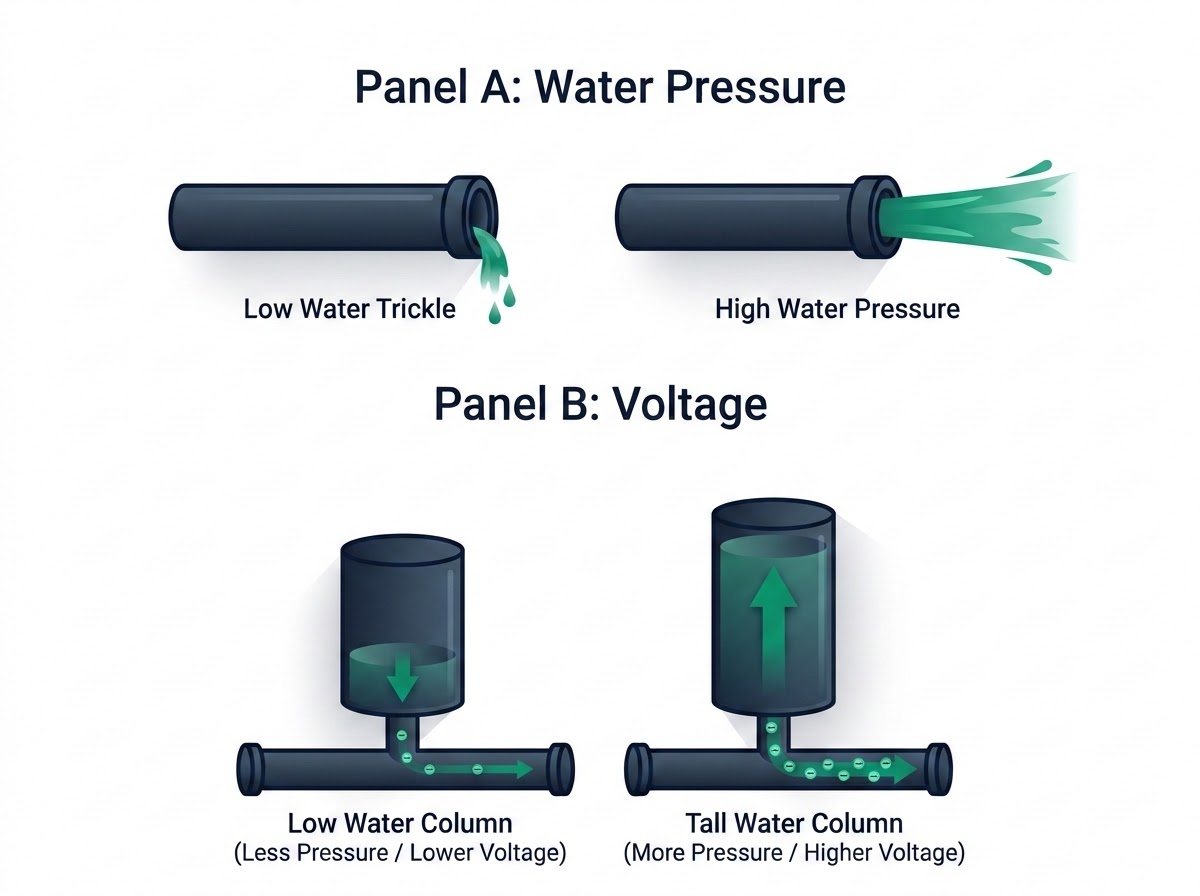
Just like water pressure can sit behind a closed valve without any water moving, voltage can exist without current. However, current cannot flow without voltage pushing it.
Current: The Flow Rate of Electrons
If voltage is the pressure, Current (I) is the flow rate, the volume of electrons moving past a given point in an electrical conductor.
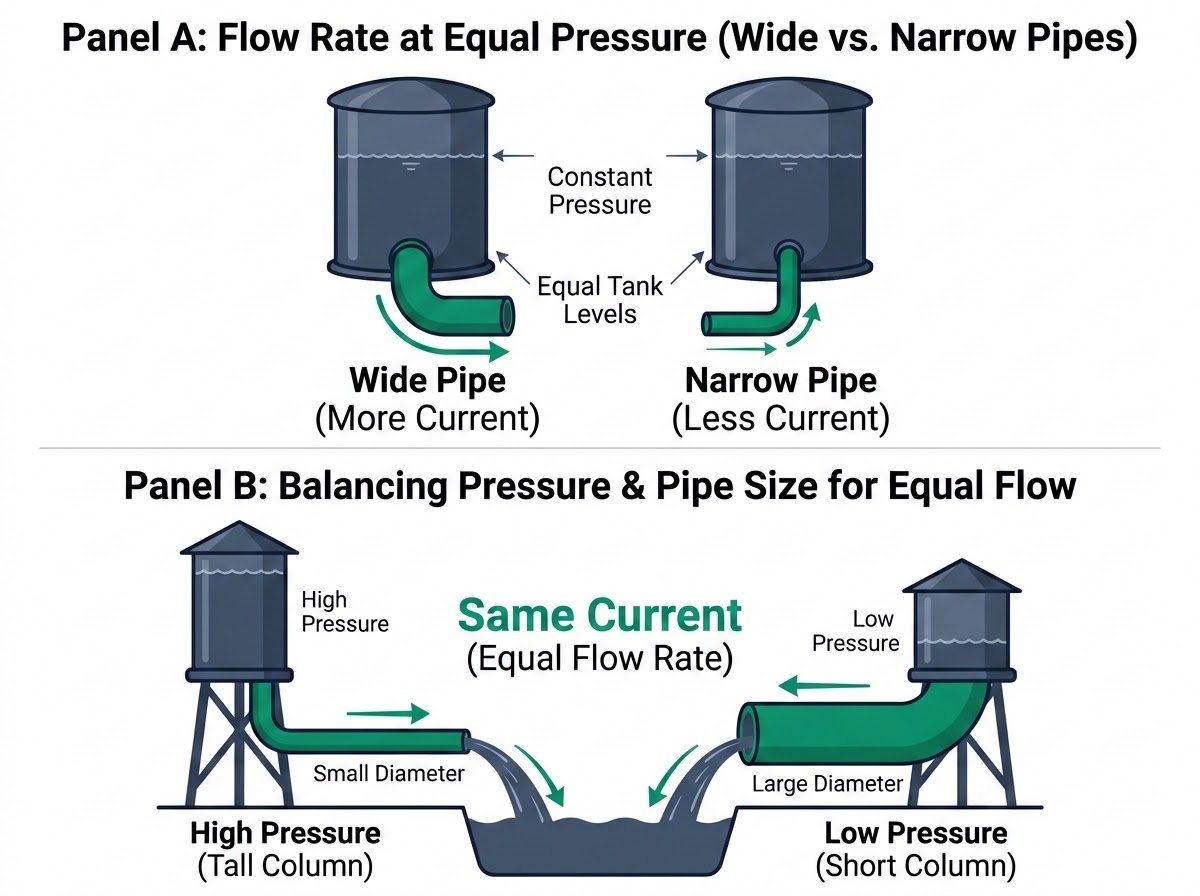
In plumbing, a wider hose allows more water to flow at a given pressure. In electrical distribution, conductor size (wire gauge) and voltage together govern how much current can safely travel from the source to the load.
Resistance: What Slows the Flow Down
Resistance (R) is anything that opposes or restricts the flow of electrons—much like sand packed inside a water pipe or a pinched section of hose.
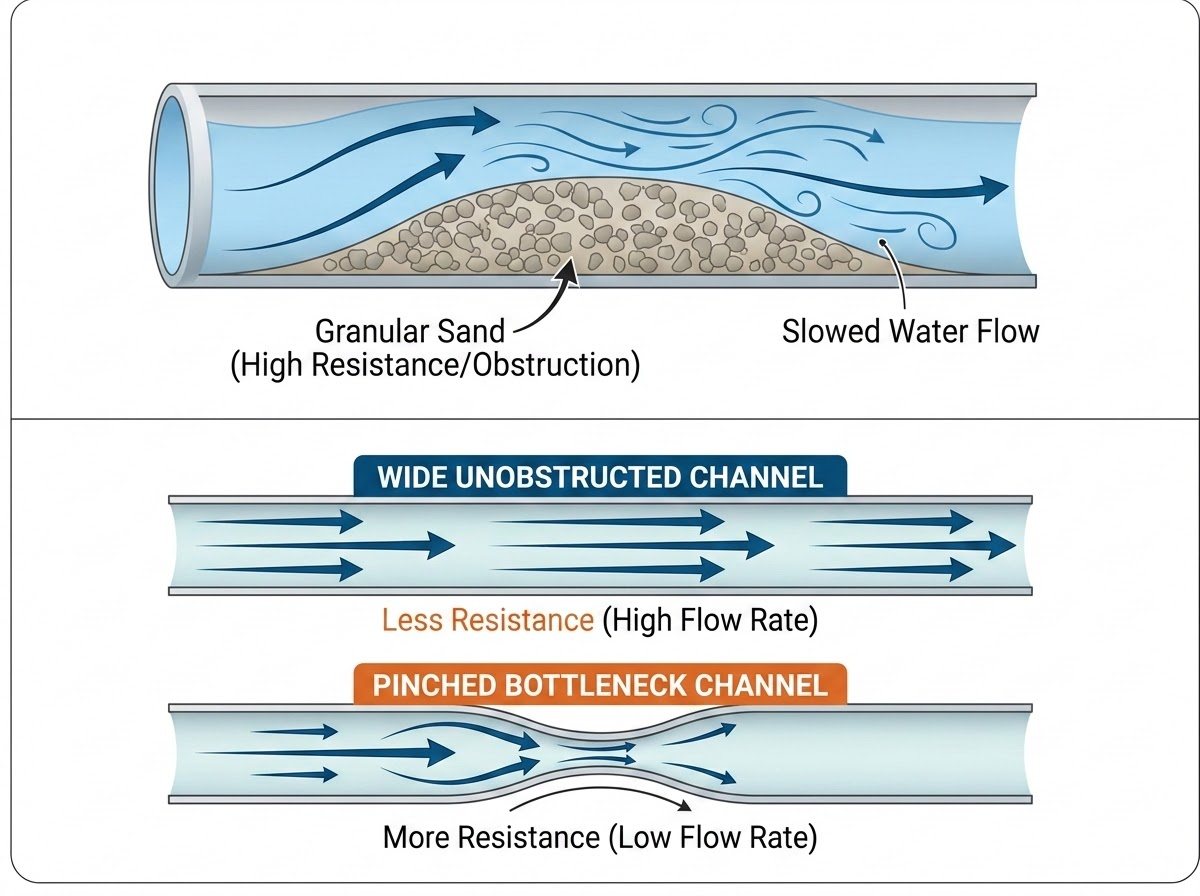
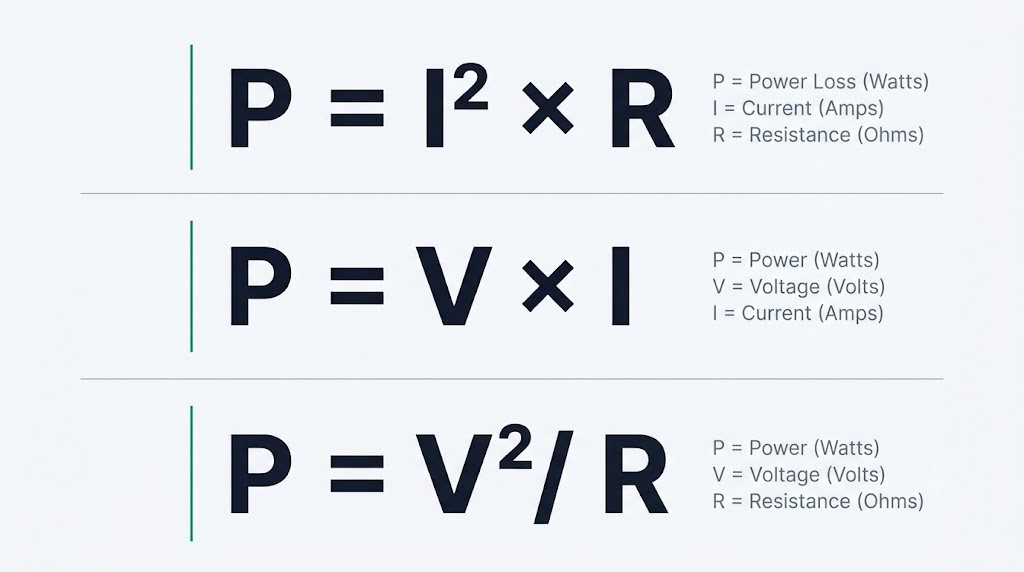
Higher resistance means less current can flow for the same amount of voltage. Every real-world wire has some resistance, which is why long cable runs experience voltage drop and heat loss (P = I²R)—a physics challenge that modern higher-voltage, fault-managed systems are specifically engineered to solve.
Putting It Together: Ohm’s Law
Voltage, current, and resistance are locked together in one foundational equation known as Ohm’s Law:
V = IR
- V = Voltage (measured in Volts)
- I = Current (measured in Amps)
- R = Resistance (measured in Ohms, Ω)
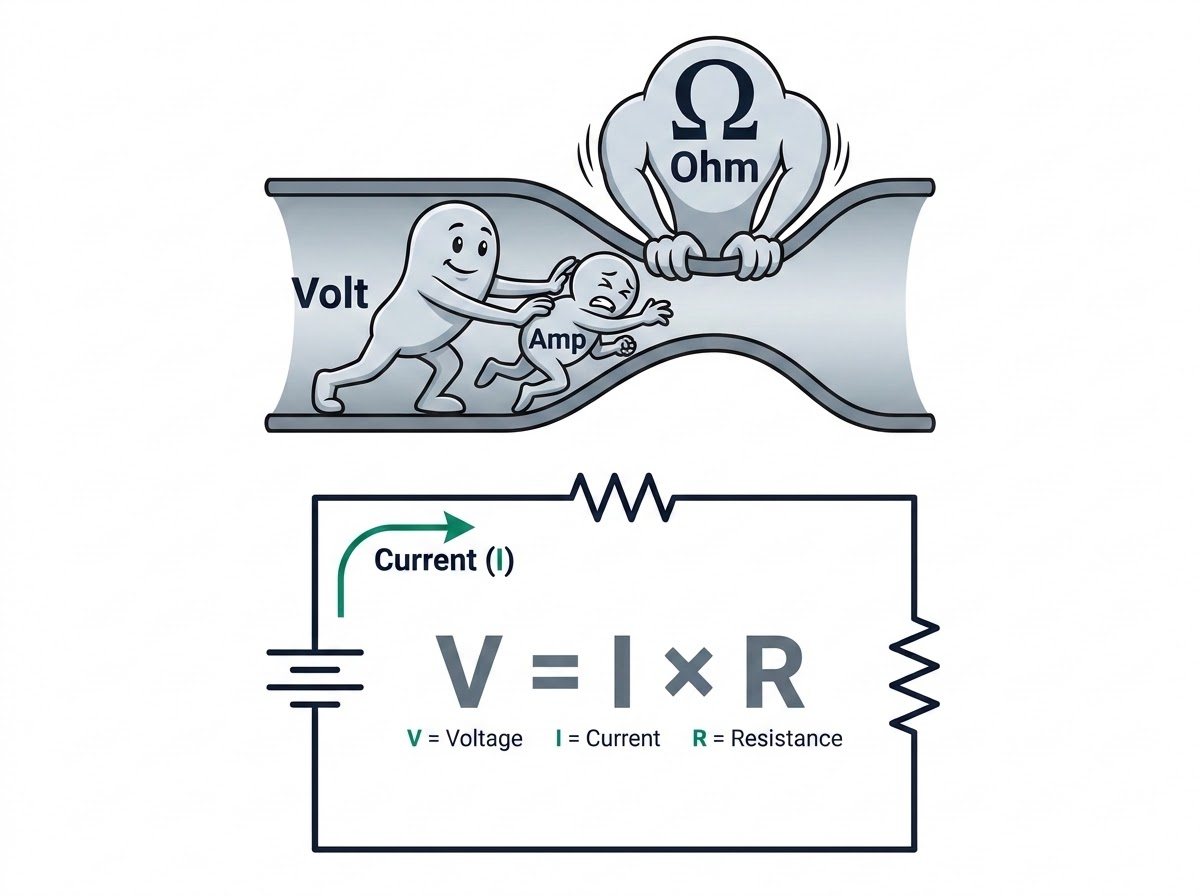
Change any single variable in a circuit, and the others respond predictably:
- Increase Voltage (with resistance constant) → Current increases.
- Increase Resistance (with voltage constant) → Current decreases.
Why This Matters for Next-Gen Power
Mastering V = IR is the first step to understanding why modern buildings and campuses are moving away from bulky, low-voltage runs toward high-efficiency, Class 4 Fault-Managed Power. By safely operating at higher voltages while monitoring every millisecond for faults, Class 4 systems push substantial power over thin, lightweight cabling, without the massive copper or rigid conduit traditional low-voltage systems demand.